
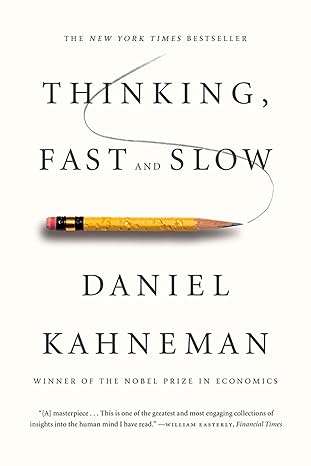
The Learning Leader: “Thinking, Fast and Slow” by Daniel Kahneman
It’s often said that every great leader is also a great reader, staying informed through books, podcasts, videos, and articles that challenge old assumptions and open new mental doors. AMSG CEO Jim O’Farrell is no exception, he continually immerses himself in ideas that sharpen his leadership perspective and enrich how he serves AMSG’s teams and customers.
For this month’s edition of The Learning Leader, Jim’s pick is a modern classic, one that didn’t come from a TV show cameo, a leadership summit, or a colleague’s book club, but from an unexpected prompt during an MIT Executive Education course. While attending Leading the AI-Driven Organization at MIT, Jim heard Senior Lecturer Paul McDonagh-Smith reference Daniel Kahneman’s groundbreaking book, Thinking, Fast and Slow. That brief mention was enough to inspire Jim to dive in.
Why This Book Matters to Leaders—Especially Now
Published in 2011, Kahneman’s book distills decades of Nobel Prize-winning research on how humans make decisions. It explores why we think the way we do, how we form judgments, and what often leads us astray—even when we’re smart, experienced, and well-intentioned.
In an era where leaders are navigating rapid technological change, unpredictable government budget cycles, and AI-enabled transformation, Thinking, Fast and Slow is a timely guide. It explains the invisible forces that shape our decisions every day, whether we’re negotiating with partners, serving our customers, or guiding teams through uncertain times.
Jim’s Takeaways from “Thinking, Fast and Slow”
Here are Jim’s favorite leadership insights from the book, and how they resonate with AMSG’s mission-driven culture:
- We All Have Two Thinkers Inside Us
Kahneman frames human thought as two systems:
- System 1: Fast, automatic, intuitive
- System 2: Slow, deliberate, analytical
Great leaders know when to trust their instincts, and when to slow down, seek more data, and challenge their assumptions. At AMSG, balancing both ways of thinking is essential to delivering thoughtful, high-trust support to our customers and to our AMSG Team Members too.
- Bias Is Human—Awareness Is Leadership
From confirmation bias to overconfidence, our brains take shortcuts that can distort judgment. Jim notes that acknowledging these tendencies is not a weakness, it’s a leadership strength. By recognizing bias, we create space for better options, diverse perspectives, and smarter decisions.
- What You See Is Not All There Is
Kahneman emphasizes that we often make decisions based on only the information right in front of us. Leaders must push themselves (and their teams) to ask what’s not being said, what data is missing, and what alternative interpretations might exist. This mindset is especially critical in government contracting, where complexity is the norm.
- Small Frictions Matter
The book’s exploration of “nudge theory” highlights how small design changes—simpler processes, clearer instructions, better communication—can significantly improve outcomes. For AMSG, this translates directly to how we enhance customer experience, streamline workflows, and support our team members.
- The Most Important Decisions Require Time
System 2 thinking reminds us to invest time in the decisions that shape our future—strategic hires, new contract pursuits, partnerships, culture, and long-term planning. As Jim reflected during the MIT program, great leadership requires the courage to pause, reflect, and choose intentionally. Also realizing that sometimes the hardest decisions are saying NO.
Why Jim Recommends “Thinking, Fast and Slow”
“This book challenged me to rethink how I make decisions as a leader, husband, father, coach, and teammate. It reminded me that clarity, calm analysis, and curiosity are essential ingredients for good leadership, especially during times of uncertainty. Kahneman gives leaders the tools to recognize how the mind works so we can make smarter, more compassionate, more mission-aligned choices.”
— Jim O’Farrell
Closing Thought
Whether you’re leading a program, developing proposals, managing operations, coaching a team, or supporting customers day-to-day, Thinking, Fast and Slow offers insights that can make each of us a stronger, more thoughtful leader.